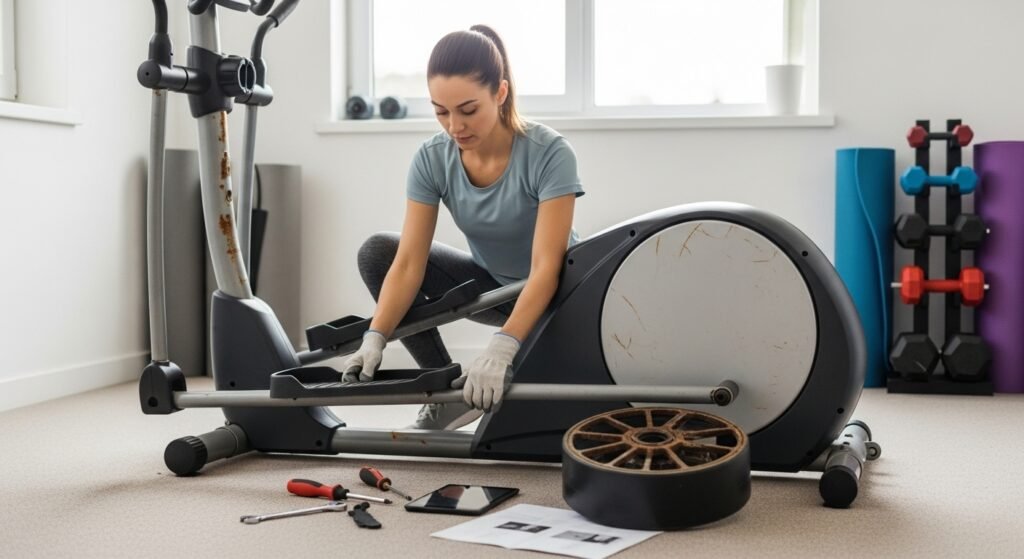
Elliptical machines are a great piece of fitness equipment—until they stop being used and start taking up valuable space. Over time, many homeowners find themselves staring at an old elliptical sitting in a spare bedroom, garage, or home gym, wondering how to get rid of it without hurting themselves or damaging their home.
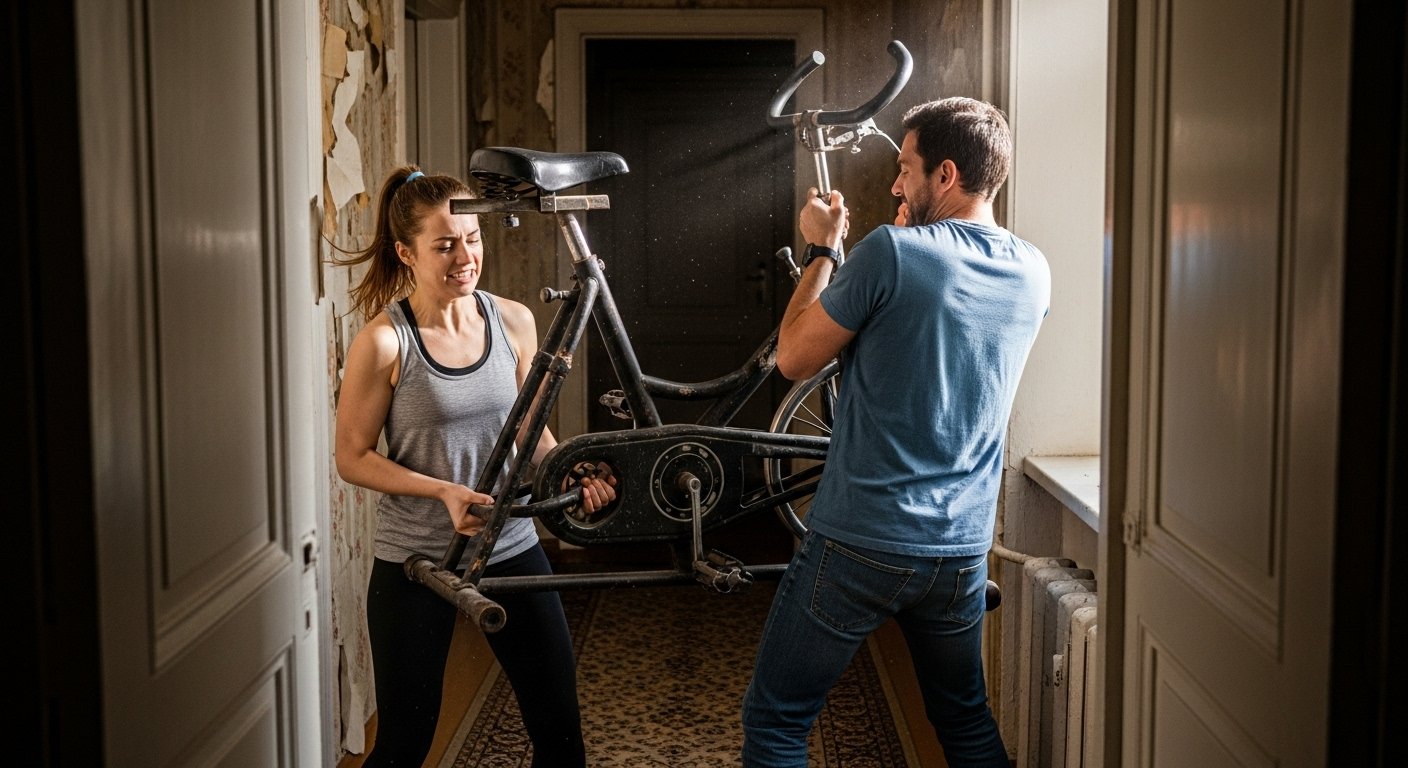
Unlike smaller exercise equipment, ellipticals are heavy, awkwardly shaped, and difficult to move. Attempting to remove one the wrong way can lead to back injuries, damaged flooring, scratched walls, or broken door frames.
Lubbock Junk Removal Service guides you through how to remove an old elliptical machine safely, what mistakes to avoid, and when it makes sense to seek professional help so you can protect both your home and your health.
How to Remove an Old Elliptical Machine Safely (Best Answer)
Unplug and disassemble the elliptical, protect floors, and move it with at least two people using a dolly or straps. If it’s heavy, upstairs, or hard to fit through doorways, hire a professional junk removal service to avoid injury or damage.
Why Elliptical Machines Are So Difficult to Remove
At first glance, an elliptical might not seem as intimidating as a treadmill—but once you try to move it, the challenges become clear.
Most elliptical machines have:
- Heavy steel frames
- Large flywheels that shift weight unpredictably
- Long handles and wide bases
- Electronic consoles and wiring
Many models weigh 150–250 pounds or more, and their uneven weight distribution makes them difficult to balance when lifting or rolling.
Because of their size and shape, ellipticals can easily:
- Scratch hardwood or tile floors
- Rip carpet
- Dent drywall
- Get stuck in doorways or stairwells
This is why proper planning and preparation are essential before attempting removal.
Safety Risks of Removing an Old Elliptical Improperly
Trying to move an elliptical without the right approach can lead to serious problems. Some of the most common risks include:
Physical Injuries
- Lower back strain from improper lifting
- Shoulder or knee injuries
- Crushed fingers or toes
- Slips and falls on stairs
Property Damage
- Gouged floors
- Chipped baseboards
- Damaged door frames
- Torn carpet or cracked tile
Many homeowners underestimate these risks until damage has already been done. Taking a few extra steps before moving the machine can prevent costly repairs.
Preparing Your Elliptical Machine for Safe Removal
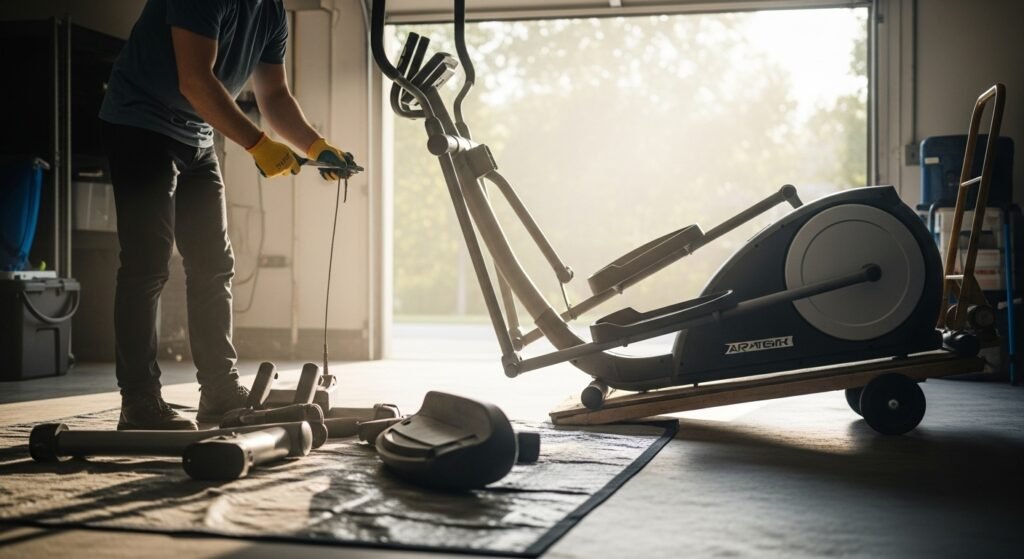
Before lifting or rolling anything, preparation is key.
1. Disconnect and Secure the Machine
- Unplug the elliptical from the power source
- Wrap and tape cords securely to the frame
- Remove batteries from the console if applicable
This prevents electrical hazards and dangling cords during transport.
2. Remove or Detach Movable Parts
Most ellipticals allow partial disassembly. Removing components makes the machine lighter and easier to maneuver.
Consider removing:
- Pedals
- Console
- Moving arms or handles
- Stabilizer bars
Place all bolts and screws in labeled bags so nothing gets lost.
3. Measure Your Exit Path
Measure:
- Doorways
- Hallways
- Staircases
This helps you determine whether the elliptical will fit through tight spaces or if further disassembly is required.
How to Protect Your Home Before Moving an Elliptical
One of the biggest mistakes people make is focusing only on lifting the machine—not protecting the home around it.
Floor Protection
- Use cardboard, plywood, or moving blankets
- Furniture sliders help reduce friction on hard surfaces
- Avoid dragging the machine directly across floors
Wall and Doorway Protection
- Pad corners and door frames with towels or foam
- Move slowly around tight turns
- Remove doors temporarily if necessary
Clear the Area
- Keep pets and children away
- Remove rugs, cords, and obstacles
- Ensure good lighting, especially on stairs
These simple steps dramatically reduce the chance of damage.
DIY Elliptical Removal: When It’s Safe to Do It Yourself
Removing an elliptical yourself can be safe under the right conditions.
DIY Works Best When:
- The machine is on the ground floor
- There are no stairs involved
- You have at least two strong helpers
- You have moving tools like dollies or straps
Basic DIY Removal Steps:
- Partially disassemble the elliptical
- Secure loose components
- Tilt carefully and place on a dolly
- Move slowly along the planned exit path
When DIY Is NOT Recommended
Avoid DIY removal if:
- The elliptical is upstairs or in a basement
- Staircases are narrow or steep
- The machine is extra heavy or commercial-grade
- You’re dealing with tight hallways or sharp turns
In these situations, attempting removal can be dangerous.
What to Do With an Old Elliptical Machine After Removal
Once the elliptical is out of your home, you still need a proper disposal plan.
Donate or Sell (If It Still Works)
If the machine is in usable condition:
- Sell locally through online marketplaces
- Donate to community centers or gyms
This is a great option if the elliptical is functional and clean.
Recycling Options
Ellipticals contain motors and electronics, so it’s best to follow proper e-waste disposal guidelines.
- Steel frames
- Aluminum parts
- Copper wiring
Some recycling centers accept fitness equipment, but you’ll need to transport the machine there.
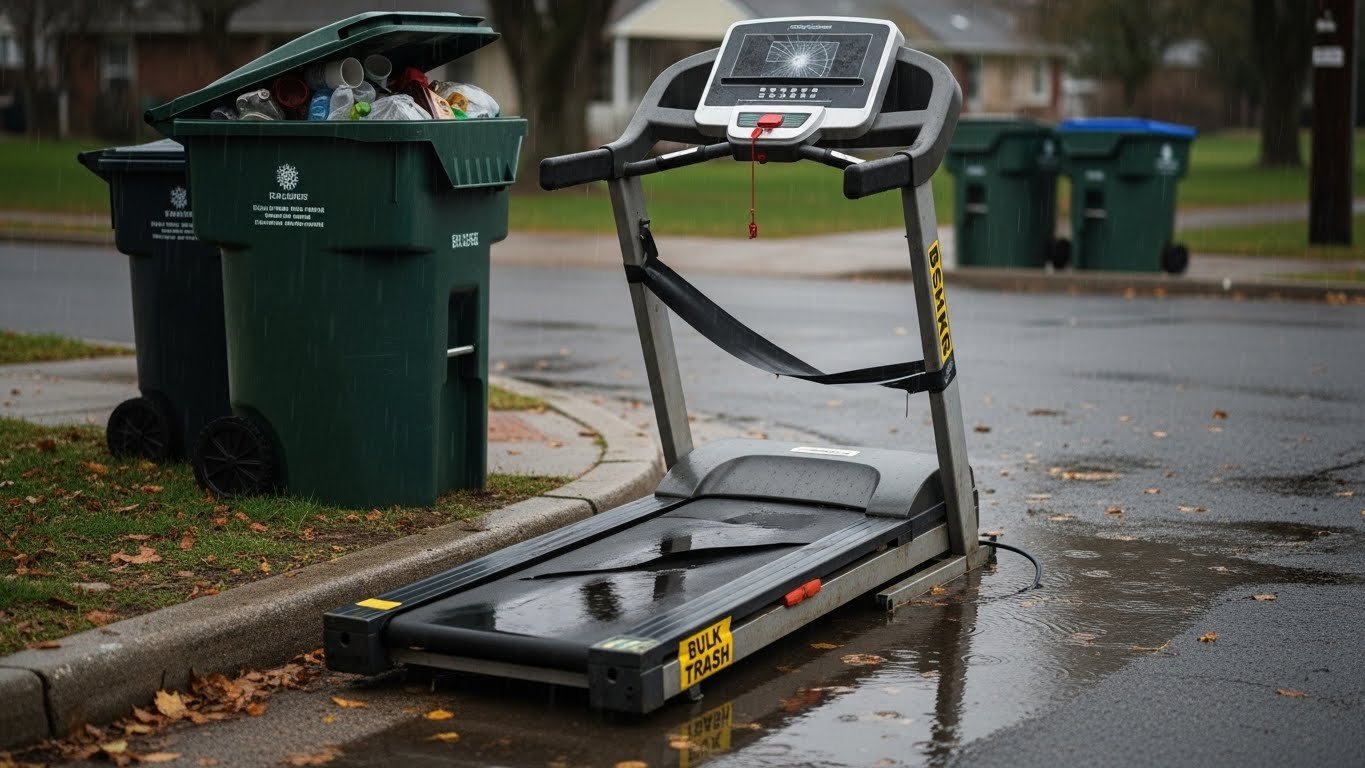
Why Curbside Pickup Usually Isn’t an Option
Most municipal trash services do not accept:
- Large fitness equipment
- Electronics with motors
- Heavy metal frames
Leaving an elliptical at the curb can result in rejection or fines.
Professional Elliptical Machine Removal: The Safest Option
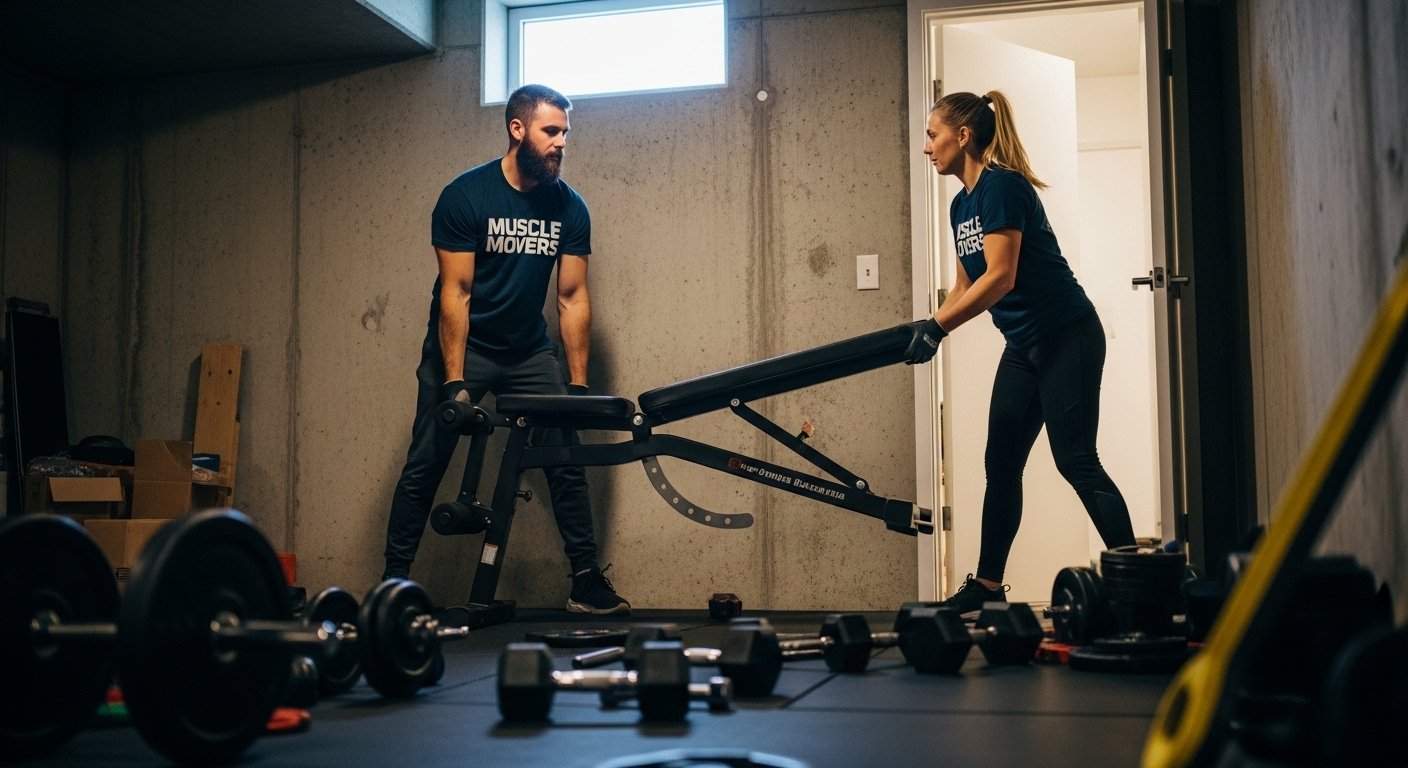
For many homeowners, hiring a professional junk removal service is the safest and most efficient solution.
Professional crews are trained to:
- Disassemble large fitness equipment
- Protect floors, walls, and staircases
- Lift heavy items safely
- Dispose of equipment responsibly
If you already use a local junk removal service, elliptical removal often falls under general fitness equipment or bulky item removal.
This approach is especially helpful if:
- The elliptical is located upstairs
- You want to avoid injury
- You don’t have help or moving tools
- Time and safety are priorities
How Elliptical Removal Fits Into Full Junk Removal Services
Many homeowners don’t realize that elliptical machines are commonly removed alongside other bulky items, such as:
- Treadmills
- Exercise bikes
- Home gym systems
- Old furniture or appliances
If you’re already clearing out a room or garage, bundling elliptical removal with a full junk removal service can save time and effort.
Cost Factors That Affect Elliptical Machine Removal
While prices vary, several factors typically influence removal costs:
- Size and weight of the elliptical
- Location inside the home
- Number of stairs involved
- Amount of disassembly required
- Additional items being removed
Common Mistakes to Avoid When Removing an Elliptical
Avoid these common errors:
- Lifting alone
- Rushing the process
- Skipping protective materials
- Ignoring stair safety
- Attempting removal without proper tools
Most accidents happen due to impatience or lack of preparation.
Final Tips for Safe Elliptical Machine Removal
- Always plan your exit path first
- Protect your home before lifting
- Use help and equipment when available
- Choose safety over speed
- Consider professional help for heavy or awkward machines
Removing an elliptical safely is less about strength and more about preparation.
Conclusion
Old elliptical machines can be difficult to remove, but with the right approach, it doesn’t have to be risky or stressful. Whether you choose to handle the job yourself or rely on a professional junk removal service, taking the proper steps protects your home, your health, and your time.
If your elliptical is heavy, located upstairs, or part of a larger cleanout, professional removal can make the process faster and safer—allowing you to reclaim your space without damage or injury. Contact Lubbock Junk Removal Service today for fast, safe elliptical removal and let our team handle the heavy lifting.
FAQs
What’s the safest way to remove an old elliptical machine without injuring myself?
Removing an elliptical safely starts with unplugging and partially disassembling the machine, protecting floors and walls, and using proper lifting techniques with at least one helper. If the machine is heavy or in a difficult location, consider hiring a professional junk removal team to avoid strain or injury.
Do I need to disassemble the elliptical before removal?
Disassembling parts like pedals, consoles, and removable arms can make the elliptical lighter and easier to maneuver through doorways and hallways. Professional junk removal services can often handle partial disassembly for you as part of their process.
Can I recycle my old elliptical machine?
Yes. Ellipticals contain metal and electronic components that can be recycled at a certified e-waste or recycling center. Removing electronic parts separately can make recycling simpler and more environmentally friendly.
Is it okay to leave an elliptical machine curbside for bulk pickup?
Most municipal trash services do not accept large fitness equipment like ellipticals curbside. Bulk pickups often have weight and size limits, so it’s typically better to arrange a scheduled pickup with a junk removal service or transport the machine to a recycling facility yourself.
What if my elliptical is upstairs or in a basement—can it still be removed?
Yes — but moving a heavy machine up or down stairs increases the risk of injury and home damage. Professional removal teams are trained and equipped to handle complex situations like tight staircases, so this is often the safest choice.
Can I sell or donate my old elliptical instead of throwing it away?
If the elliptical still works and is in good condition, you can try selling it locally or donating it to a gym, community center, or charity. Preparing it properly (cleaning and removing detachable parts) can make pickup or resale easier.